Key takeaways
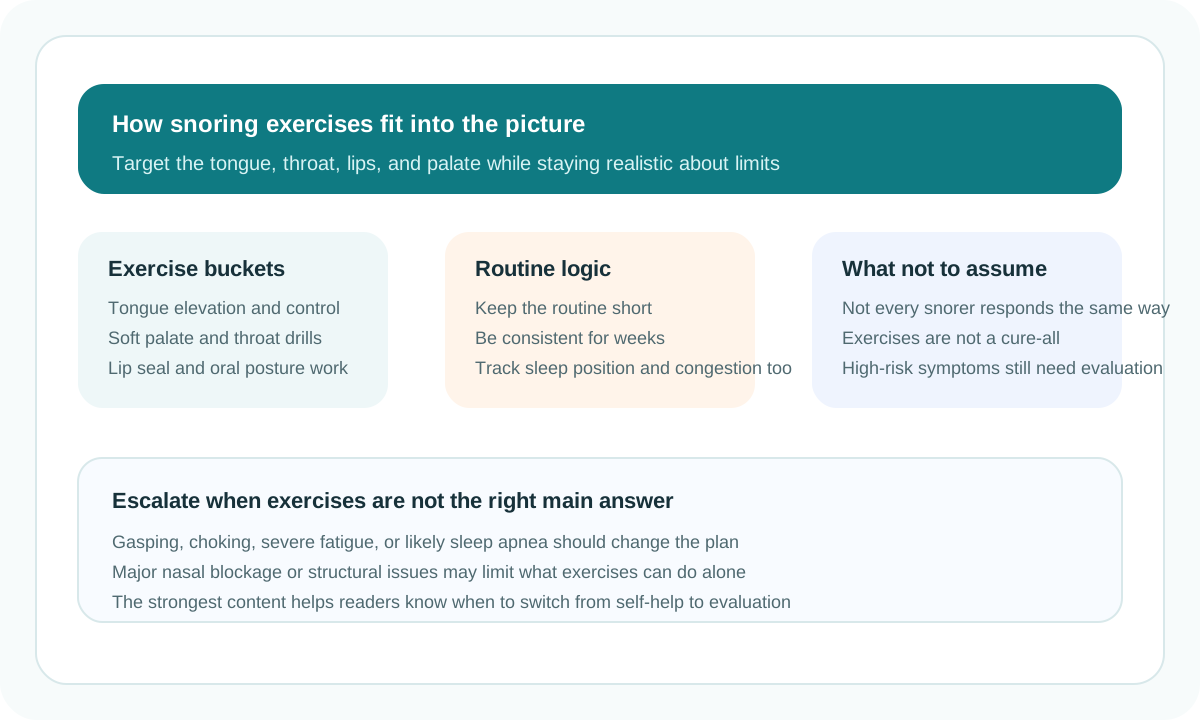
- Snoring exercises work best when they are practical and specific, not vague advice to "strengthen the airway."
- The most useful routines focus on named drills for the tongue, soft palate, lips, cheeks, and nasal breathing.
- Research is mixed but real: randomized trials have tested daily or near-daily oropharyngeal exercises over 8 to 12 weeks, not one-off drills.
- Exercises fit best when snoring looks mild to moderate and not obviously tied to untreated apnea or a constantly blocked nose.
- Gasping, choking, witnessed pauses, and dangerous daytime sleepiness are stop signs for DIY-only treatment.
Why snoring exercises can help
Snoring happens when airflow turns slack tissue into a vibrating sound source during sleep. Mouth and throat exercises try to improve tone and coordination in the tongue, soft palate, lips, cheeks, and upper throat so the airway is less floppy when you relax at night.
This is why the topic often gets grouped under oropharyngeal exercises or myofunctional therapy. In plain terms: drills may help some snorers, but they do not replace sleep testing when apnea is plausible or fix a nose that stays blocked every night.
The goal is steadier sleep posture, not stronger noise-making
Good drills are usually quiet, controlled, and a little boring. They train the tongue to rest against the palate, the lips to seal without jaw clenching, and the soft palate and throat to move on purpose. If a routine mostly makes you strain, gag, or overwork the jaw, it is probably too aggressive.
8 snoring exercises worth trying first
People searching for snoring exercises usually want the moves up front, with clear names and a short explanation of what each one is trying to train.
1. Tongue slide
Place the tongue tip behind the top front teeth, then slide the whole tongue backward along the roof of the mouth and forward again.
2. Tongue push-up
Press the entire tongue firmly into the roof of the mouth and hold for a slow count before relaxing.
3. Tongue stretch
Stick the tongue straight out, then reach it toward the nose and then toward the chin to work range and control.
4. Vowel repetition
Repeat exaggerated vowel sounds slowly so the soft palate, cheeks, and throat have to move on purpose rather than passively.
5. Controlled tongue pop
Create a firm tongue suction against the palate and release it with control instead of a sloppy mouth click.
6. Cheek hook
Gently pull one cheek outward with a finger while resisting from inside with the cheek muscles, then repeat on the other side.
7. Lip seal hold
Rest the lips together and breathe quietly through the nose for short intervals without clenching the jaw.
8. Easy nasal-only breathing
Spend one or two calm minutes with lips closed and shoulders relaxed to make sure the routine is not training through a blocked nose.
What each exercise is trying to train
Each drill maps to a common snoring mechanism: tongue falling back, soft palate fluttering, lips not sealing, or relying on the mouth because the nose is blocked.
Tongue control
Tongue slides, push-ups, stretches, and pops train the tongue to move and rest against the palate instead of falling backward or sitting low in the mouth.
Soft-palate movement
Slow vowels and controlled throat sounds ask the soft palate and upper throat to lift and coordinate, which is why sloppy speed matters less than clean movement.
Lip seal and nasal airflow
Lip holds and easy nasal-only breathing help you notice whether mouth opening is a habit, a weak seal, or a sign that the nose is too blocked for exercises alone.
A simple 5-minute snoring exercise routine
Pick a small stack you will actually repeat. Five focused minutes most days beats a twenty-minute program you quit on day three.
- Do 1 minute of tongue slide or tongue push-up work.
- Do 1 minute of vowel repetition or controlled tongue pops.
- Do 1 minute of cheek hook or lip-seal work.
- Finish with 1 to 2 minutes of easy nasal-only breathing.
- Track snoring loudness, congestion, alcohol, and sleep position for 2 to 6 weeks before judging the plan.
A better way to track progress
Use a quick nightly log instead of guessing. Our printable 14-day symptom log covers sleep position, nasal airflow, alcohol and sedatives, snoring versus your baseline, gasping or pauses, dry mouth, and how rested you felt—so you can tell whether the exercise block is doing anything over a few weeks.
Choose the track that matches your snoring pattern
Use this as a quick triage tool before you commit to a routine. The same exercises can feel useful in one pattern and pointless in another.
Mouth-open snoring
Prioritize tongue-to-palate work, lip-seal holds, and nasal-only breathing. Also check whether congestion is forcing the mouth open.
Back-sleeping snoring
Pair the routine with side-sleeping or head-position changes. Exercises may help tissue tone, but position can still overwhelm the airway.
Congestion-driven snoring
Treat nasal airflow as the first lever. Exercises can support the airway, but they rarely beat allergies, sinus swelling, or a blocked nose by themselves.
Who snoring exercises fit best
Quick gut check before you invest weeks of practice.
- Better fit: mild to moderate snoring, mouth-open posture, poor lip seal, tongue posture issues, or snoring that gets worse with fatigue and back-sleeping.
- Less reliable fit: a nose that stays blocked, large anatomy-driven obstruction, heavy alcohol-related snoring, or symptoms that strongly suggest obstructive sleep apnea.
- Best use case: one piece of a bigger plan that also looks at nasal airflow, sleep position, body weight, and medical review when needed.
If congestion runs the show, start there
When snoring tracks tightly with allergy season or every cold, improving nasal airflow usually matters more than adding tongue drills. Exercises help most when you are not fighting through a blocked nose every night.
How often to do snoring exercises and what the research says
Consistency is the common thread across the better studies. Randomized trials and systematic reviews do not test one dramatic session. They test repeated work over weeks.
Reasonable expectation
Think of snoring exercises like a structured rehab habit: useful for some people, slow to judge, and limited by the cause of the snoring. The best evidence supports a several-week trial, especially when snoring is mild to moderate and not dominated by untreated sleep apnea or constant nasal obstruction.
- A 2015 randomized trial in CHEST followed 39 adults with primary snoring or mild to moderate OSA for 3 months. The exercise group did daily oropharyngeal exercises and had significant reductions in objectively measured snoring.
- A 2018 randomized controlled trial in Sleep and Breathing tested 15 minutes of daily app-guided upper-airway training for 12 weeks in 16 people. The exercise group improved objective snoring measures and bed-partner reports, but the study was small.
- A 2020 Cochrane review found that myofunctional therapy probably reduces subjective snoring intensity and may improve AHI, sleepiness, and sleep quality in the short term. The certainty ranged from moderate to very low, so the review still points to cautious expectations.
- A 2024 systematic review and network meta-analysis covering 24 studies and 956 patients found that oropharyngeal exercise improved sleep quality and daytime sleepiness measures, but the authors still called for larger and more rigorous trials.
Reasonable takeaway: these drills are real physiotherapy for the upper airway, not magic, and the evidence is strongest for sticking with them over weeks while you track symptoms. If nothing changes, the problem is probably not “weak throat muscles” alone.
- Aim for a short routine most days of the week rather than occasional marathon sessions.
- Keep the same core routine long enough to judge it fairly before changing all the variables.
- Stop and get advice if exercises cause pain, jaw aggravation, dizziness, or worsening symptoms.
- If the snoring is unchanged after a sustained trial, shift the next question from "Which drill now?" to "What cause am I missing?"
Video walkthroughs
Follow-along video can help after you have seen the written routine once.
Throat Exercises for Snoring
Follow-along drills that match the exercise-first approach of this page.
Five Exercises for Snoring
A short visual version if you prefer to watch the sequence before practicing.
When snoring exercises are not enough
Exercises help less when the underlying problem looks like apnea, major congestion, or anatomy that keeps collapsing no matter how diligent you are.
- Use exercises as support, not the main plan, if your nose is blocked most nights.
- Do not use exercises to delay care when snoring is paired with choking, gasping, witnessed pauses, or unsafe sleepiness.
- Get professional advice if drills trigger jaw pain, headaches, dizziness, gagging that does not settle, or worsening sleep.
Book medical evaluation sooner if the snoring comes with choking, gasping, witnessed pauses, morning headaches, uncontrolled blood pressure, or sleepiness that feels unsafe while driving. Those signs deserve sleep-apnea thinking, not just a longer exercise playlist.
Frequently asked questions
- Do snoring exercises really work? They can help some people, especially when snoring is tied to oral muscle tone, tongue posture, or mild airway collapse. They are much less convincing when apnea signs or constant nasal blockage are doing most of the driving.
- How long should I try them before I decide? A fair trial is usually 8 to 12 weeks of near-daily practice, not one or two nights. Track a few variables so you can tell whether the routine is helping or whether congestion, back sleeping, alcohol, or apnea signs keep overwhelming it.
- Which exercises show up most often? Tongue slides, tongue push-ups, exaggerated vowel sounds, lip-seal work, cheek resistance, and nasal-breathing drills appear over and over in exercise routines.
- Can I use exercises instead of a sleep study? No. Exercises are a home strategy, not a substitute for diagnostic testing when apnea is on the table. If the symptom pattern looks high-risk, evaluation comes first.
Sources and references
- SleepApnea.org: Tongue, throat, and mouth exercises for snoring
- Sleep Foundation: Sleep apnea exercises for snoring
- CHEST: Effects of Oropharyngeal Exercises on Snoring
- PubMed: Smartphone-based delivery of oropharyngeal exercises for treatment of snoring
- Cochrane review: Myofunctional therapy for obstructive sleep apnoea
- PubMed (PMID 39476608): systematic review and network meta-analysis
- MedlinePlus: Snoring - adults
- American Academy of Sleep Medicine: sleep apnea warning signs