Key takeaways
- Open-mouth sleep is usually telling you something about airflow: congested nose, jaw dropping open on your back, alcohol or sedatives relaxing the throat, or sleep apnea destabilizing breathing.
- In a 2022 study of 60 people with obstructive sleep apnea versus 15 healthy controls, the OSA group spent about 97% of sleep time with the mouth open compared with roughly 27% in controls, and lost more water overnight—which lines up with dry-mouth complaints.
- Fix the airway and the nose before you worry about “retraining” the lips. Tape and gadgets are a poor substitute for a blocked nose or untreated apnea.
Why mouth breathing gets worse at night
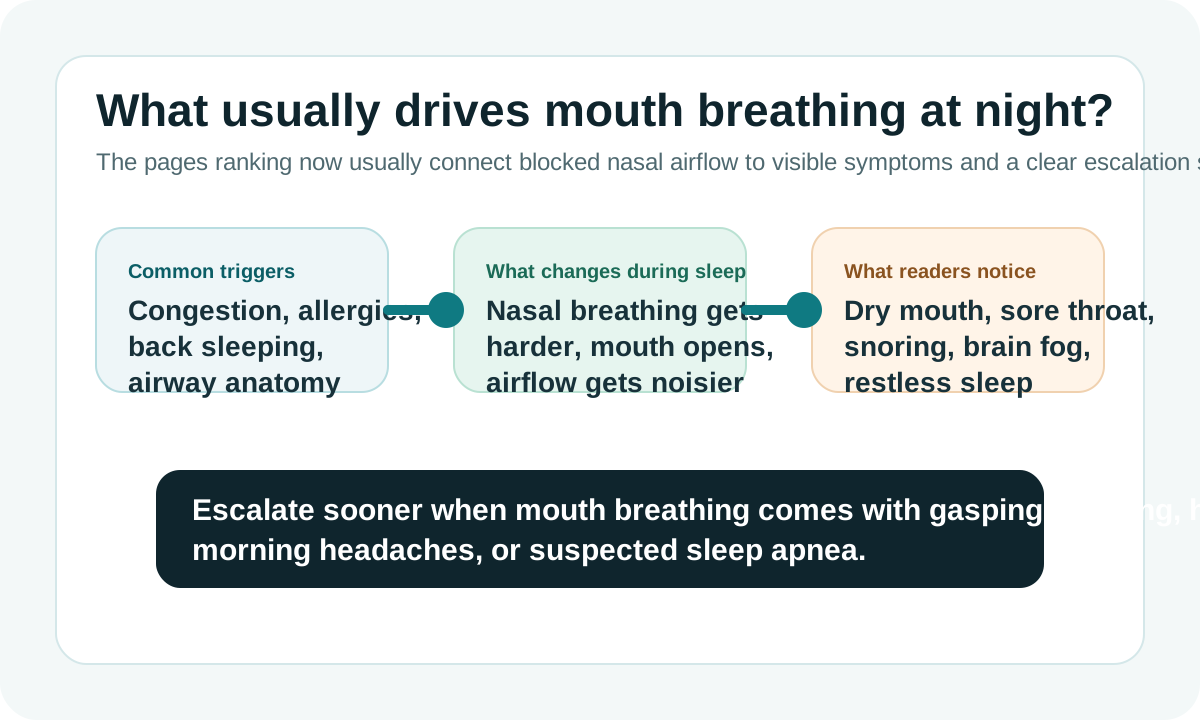
Mouth breathing often becomes more obvious after lights out because lying down changes the nose and throat at the same time. Congested nasal tissue may swell more when you are flat, the jaw may fall open on your back, and the tongue and soft palate relax as sleep deepens.
That is why nighttime mouth breathing shows up in the same searches as snoring, sleep apnea, and mouth taping. The real question is almost always whether air is moving easily, not whether you are “lazy” about closing your lips.
Nasal blockage
Allergies, colds, sinus irritation, dry air, polyps, or a deviated septum can make nose breathing feel harder at bedtime.
Sleep position
Back sleeping can let the jaw drop and the tongue settle backward, which makes open-mouth breathing more likely even with mild congestion.
Sleep-disordered breathing
Mouth breathing that comes with snoring, gasping, or unrefreshing sleep may be a sign that the airway is narrowing during sleep.
Symptoms of mouth breathing at night
The pattern is usually obvious once you know what to look for.
- Dry mouth on waking
- Sore throat or sticky throat in the morning
- Sleeping with the mouth open or waking with the jaw dropped
- Louder snoring, especially on congested nights
- Restless sleep, fragmented sleep, or waking unrefreshed
- Needing water by the bed
- Bad breath or cracked lips after sleep
One useful distinction
Occasional mouth breathing on a cold night is different from waking dry and congested most nights. Frequency matters. A pattern is much more informative than a one-off bad night.
Effects and risks of mouth breathing at night
It also helps to separate why nighttime mouth breathing happens from what it actually does to sleep and airway comfort.
Dry mouth and throat irritation
Breathing through the mouth skips the nose's warming and humidifying job, so many people wake dry, thirsty, or scratchy-throated.
Worse snoring and sleep disruption
Open-mouth breathing can change tongue and palate position, which often makes snoring louder and sleep more fragmented.
A clue to something bigger
Nighttime mouth breathing is common in sleep apnea. In a 2022 case-control study, OSA patients spent 96.7% of total sleep time with the mouth open versus 26.7% in controls.
That same 2022 study of 60 OSA patients and 15 healthy controls also found greater estimated overnight water loss in the OSA group, which helps connect the dots between mouth breathing, dry mouth, and poor sleep quality.
How to stop mouth breathing at night
The most useful approach is not to jump straight to one hack. Start with the likely cause, then try simple treatment experiments that actually fit that cause.
- Track a short pattern log for 1 to 2 weeks: congestion, allergies, pets, alcohol, sleep position, snoring, and wake-up dryness.
- Compare side sleeping versus back sleeping on similar nights and note whether the mouth still falls open.
- Address nasal airflow first with simple measures like saline rinses, allergen control, and bedroom humidity when dryness or congestion is the obvious driver.
- Review sedating triggers such as evening alcohol or medications that seem to worsen open-mouth sleep.
- Add supportive training such as oral exercises only after you have considered whether the nose and airway are the bigger issue.
Try a simple log before you buy anything
We publish a free 14-day sleep breathing symptom log (print or PDF) with the same fields we care about here: nose, position, alcohol, snoring, gasping, dry mouth, and morning energy. Patterns beat guessing, and a filled-in sheet makes a clinician visit more useful if you need one.
Mouth taping at night: use caution
Mouth taping gets a lot of attention around this topic, but it should not be treated as a universal fix. In many cases it is something to be cautious about.
Henry Ford Health notes that there is no solid evidence supporting mouth taping as a broad solution and warns that, in the wrong person, it may impair breathing, disrupt sleep, or reduce oxygen levels. That is especially relevant if you snore, wake up gasping, or suspect a blocked nose or sleep apnea.
- Do not make tape the first move if the nose is blocked most nights.
- Do not use it as a way to ignore loud snoring, gasping, or witnessed pauses.
- Do not assume dry mouth automatically means the answer is keeping the lips closed by force.
- Clear the airway question first, then decide whether any mouth-closure strategy is appropriate.
Video walkthroughs
These walkthroughs cover practical first steps and why mouth taping is controversial.
How To Stop Mouth Breathing At Night
A practical walkthrough of common nighttime drivers and first-step experiments.
The Science of Mouth Taping
A useful cautionary companion, not a blanket endorsement.
When to talk to a doctor
Self-care has limits. These signs overlap too much with obstructive sleep apnea to ignore.
Red flags worth taking seriously
Get checked sooner if mouth breathing is most nights and comes with loud snoring, witnessed pauses, choking or gasping, morning headaches, persistent dry mouth despite simple fixes, or daytime sleepiness that affects work, school, or driving.
Those signs overlap too strongly with obstructive sleep apnea to brush off. A website can help you recognize the pattern, but it cannot rule it out.
Frequently asked questions
- Why do I breathe through my mouth at night? Usually because the nose is partly blocked, the jaw drops open during sleep, or the airway becomes unstable. Common drivers include allergies, congestion, back sleeping, alcohol, sedating medicines, and sleep apnea.
- Is sleeping with your mouth open a bad sign? Not always, but it can be a useful clue. It often goes with dry mouth, snoring, and disrupted sleep, and in some people it points to impaired nasal airflow or sleep apnea risk.
- Is mouth taping safe? Not automatically. If you snore, wake up gasping, or have a nose that never feels open, get the airway problem assessed before using tape.
- What should I try before buying anything? Track the pattern, test sleep position, address obvious congestion, and notice whether alcohol or sedating medications make it worse. Those low-cost clues usually point you to the right next step faster than shopping does.
Sources and references
- Cleveland Clinic: Mouth Breathing
- Sleep Foundation: Sleeping With Mouth Open and Mouth Breathing
- American Academy of Otolaryngic Allergy: Keep Your Mouth Shut At Night
- Henry Ford Health: Mouth Taping At Night: Get The Facts
- PMC: Mouth opening/breathing is common in sleep apnea and linked to more nocturnal water loss