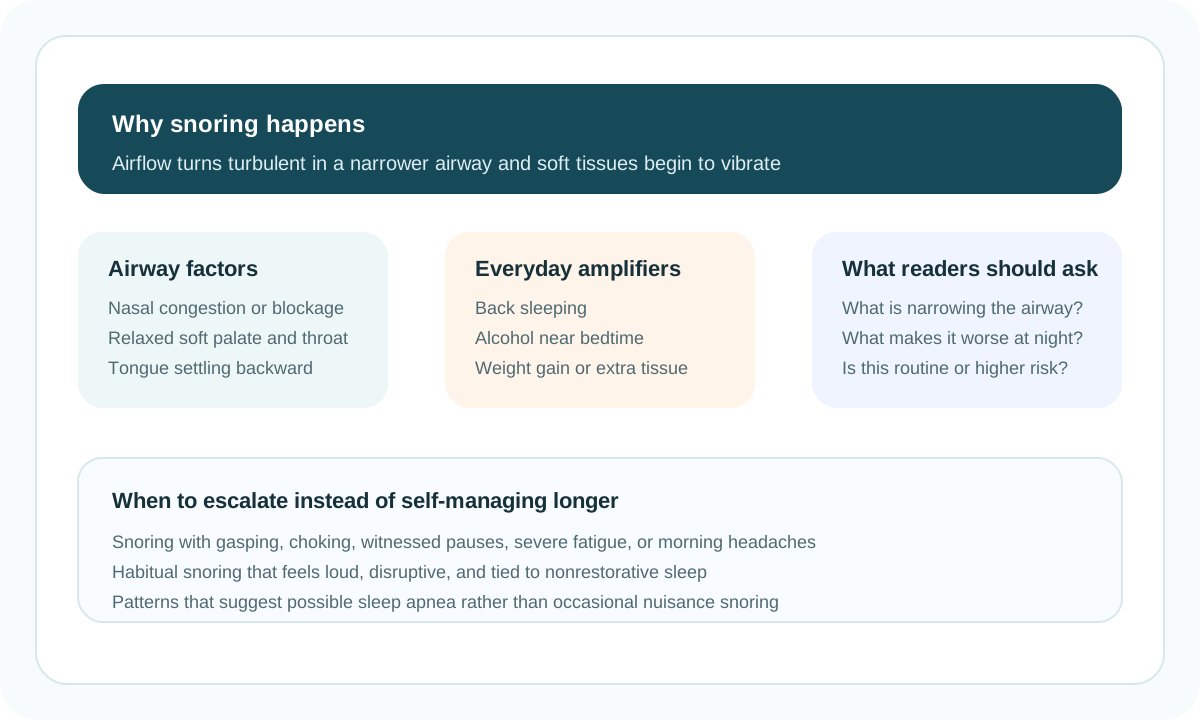
Key takeaways
- Snoring is tissue vibration: airflow speeds up through a partly blocked nose or throat and shakes the soft palate, uvula, and throat walls.
- Roughly 40% of adult men and 24% of adult women snore habitually, per the American Academy of Sleep Medicine’s Sleep Education site.
- Back sleeping, alcohol, nasal congestion, extra weight around the neck, and age-related muscle relaxation often stack on the same night.
- Heavy snoring can overlap with sleep apnea, but many snorers do not have apnea. Choking, gasping, pauses someone else notices, or unsafe sleepiness are the signals that matter.
What snoring actually is
Snoring is not just “being loud in your sleep.” It is a sound created when air cannot move smoothly through the nose, mouth, and throat once sleep has relaxed the tissues that help keep the airway open.
As the airway narrows, airflow speeds up and becomes turbulent. That messy airflow vibrates the soft palate, uvula, throat walls, and sometimes the tongue base. The sound is most often loudest on the inhale, but it can be heard during exhalation too depending on where the restriction sits.
Why the sound changes
Snoring volume can shift from night to night because the airway is not static. Congestion, back sleeping, alcohol, sedating medications, and sleep depth can all change how narrow or floppy the passage becomes.
What snoring can feel like in real life
The sound is only part of the story. Dry mouth, a sore throat, or waking unrefreshed can be clues that airflow is messy all night, not just noisy for a few minutes.
- Waking with a dry mouth or sore throat
- Broken sleep for you or a bed partner
- Waking yourself up with sound
- Morning tiredness or headaches
- Snoring that gets worse with colds, allergies, or alcohol
- Not knowing you snore until someone else tells you
Many people do not know they snore until someone tells them. In one clinical cohort summarized by the AASM, objective snoring showed up in 88% of women, but only 72% said they snored. A bed partner is not being picky; they are often the first reliable witness.
Common causes of snoring
Different causes point to different fixes. Congestion, anatomy, and sleep apnea are not the same problem even when the sound is similar.
Nasal blockage
Allergies, colds, chronic congestion, a deviated septum, or nasal polyps increase resistance before air even reaches the throat.
Back sleeping
Sleeping on your back can let the jaw drop and the tongue settle backward, narrowing the airway and making vibration more likely.
Alcohol and sedatives
These reduce upper-airway muscle tone, which makes the throat more collapsible during sleep.
Weight and neck tissue
Extra tissue around the throat can put more pressure on the airway from the outside and increase snoring risk.
Age-related muscle changes
As muscle tone drops over time, tissues may become more likely to vibrate or collapse during sleep.
Jaw and airway anatomy
A set-back jaw, a large tongue base, enlarged tonsils, or a long soft palate can all make the airway narrower before sleep even starts.
Why am I snoring now when I did not used to?
New snoring often points to a change in one of the main drivers rather than a mystery.
- Recent weight gain or a larger neck circumference
- A new allergy season, viral illness, or chronic congestion pattern
- More back sleeping because of pain, travel, or a new mattress setup
- More evening alcohol or a new sedating medication
- Pregnancy-related swelling or hormonal changes
- A shift from occasional snoring to nightly snoring because several smaller triggers are stacking together
Snoring versus sleep apnea
Not everyone who snores has obstructive sleep apnea, but the difference matters because the follow-up is totally different.
Primary snoring means noisy sleep breathing without the repeated breathing drops, oxygen changes, or sleep disruption that define obstructive sleep apnea. But symptoms matter more than loudness alone. Even a mild-sounding snore can deserve a workup if it comes with witnessed pauses, choking, headaches, or major daytime sleepiness.
One useful reality check
Loudness is a clue, not a verdict. A 2010 clinical study of 1,643 habitual snorers found that snoring intensity increased as OSA severity increased, but diagnosis still requires proper evaluation and not just a “sounds loud” guess.
How to reduce snoring at home
Start with the lever that matches your pattern. None of this replaces a sleep evaluation if apnea signs are present.
- Track two weeks of triggers before you overhaul your routine: our printable symptom log is built for congestion, position, alcohol, and snoring loudness so you can see what actually lines up.
- Treat nasal blockage deliberately with allergen control, saline rinses, and clinician-guided treatment if congestion persists.
- Try side sleeping if back sleeping clearly makes the snoring louder.
- Move alcohol earlier or skip it on test nights to see whether it is a major trigger.
- Review sedating medications and sleep aids with a prescriber if snoring worsened after a change.
- Address excess weight when it appears to be part of the pattern; this is risk reduction, not blame.
- If oral posture seems central, pair the cause workup with our snoring exercises guide instead of relying on a gadget-first approach.
Can you prevent snoring?
Sometimes, when the triggers are things you can change. Major medical centers and Sleep Education (AASM) tend to agree on the same basics: protect nasal airflow, limit alcohol before bed, favor side sleeping if position matters, and pay attention to weight and blood-pressure trends when they line up with new snoring.
- Keep nasal congestion under better control.
- Avoid alcohol close to bedtime when it is a clear trigger.
- Sleep on your side if your snoring is position-sensitive.
- Address weight changes that line up with worsening snoring.
- Do not ignore a new or rapidly worsening snoring pattern.
Video walkthroughs
Short visual explainers help with the mechanics, especially if you are trying to picture where the sound comes from.
Why Do People Snore?
Short overview of common causes in everyday language.
The Science of Snoring
Useful for visualizing narrowing and tissue vibration without product hype.
When to see a doctor about snoring
Annoying noise is one thing. Repeated breathing disruption is another. These are reasonable reasons to book an appointment rather than keep stacking home experiments.
Get checked sooner if snoring comes with:
Witnessed pauses, choking or gasping, morning headaches, very fragmented sleep, daytime sleepiness that affects driving or focus, high blood pressure that stays hard to control, or a snoring pattern that changed sharply without a clear explanation.
Children who snore most nights also deserve evaluation, because enlarged tonsils, adenoids, and airway narrowing can matter earlier than many people assume.
Frequently asked questions
- Why does snoring happen? Snoring happens when air cannot move smoothly through a partly narrowed airway during sleep. The faster, rougher airflow makes tissues in the back of the throat vibrate.
- What makes snoring worse? The big triggers are nasal congestion, back sleeping, alcohol or sedatives, weight gain, aging-related muscle tone changes, and certain jaw or airway anatomy patterns.
- Does snoring mean sleep apnea? No. Many people who snore do not have sleep apnea. But snoring with choking, gasping, witnessed pauses, or daytime sleepiness should be evaluated.
- How can I reduce snoring at home? Start with the simplest likely driver: treat congestion, avoid alcohol close to bedtime, try side sleeping if position matters, and step back to look for recent changes in weight, medications, or allergies.
Sources and references
- Sleep Education by the American Academy of Sleep Medicine: Snoring
- Cleveland Clinic: Snoring
- Mayo Clinic: Snoring - Symptoms and causes
- MedlinePlus: Snoring - adults
- American Academy of Sleep Medicine: Women underreport snoring
- Journal of Clinical Sleep Medicine: Does Snoring Intensity Correlate with OSA Severity?