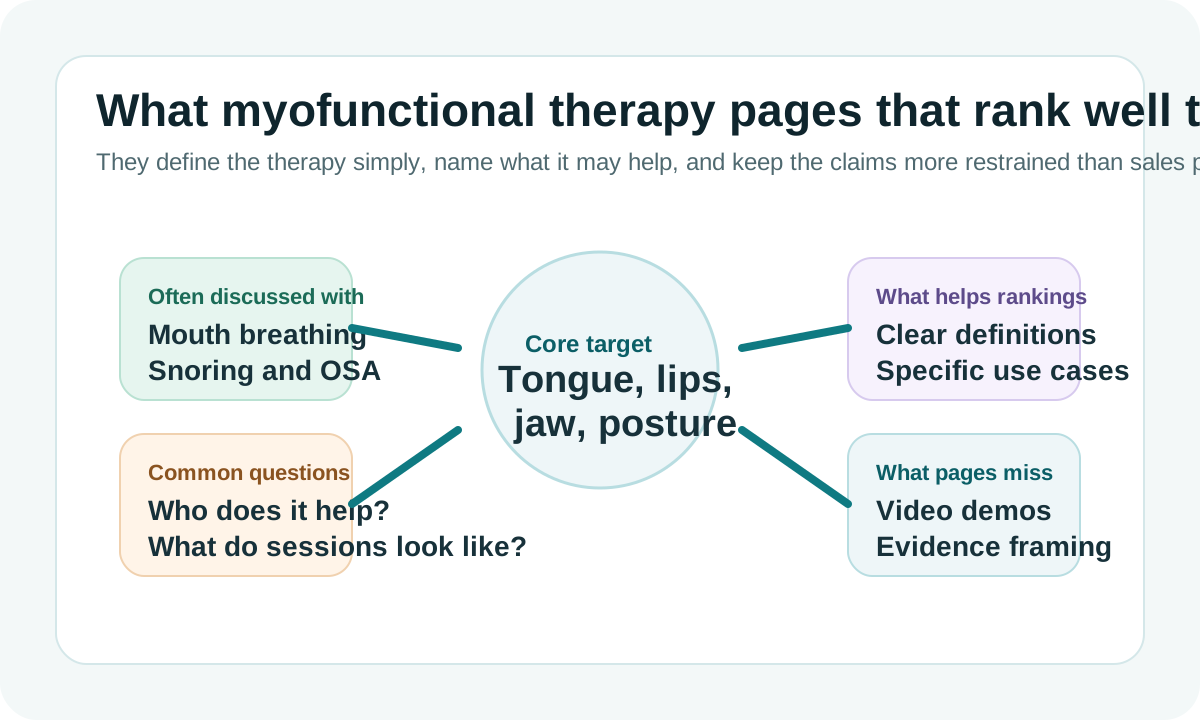
Key takeaways
- Therapists teach new resting posture for the tongue and lips, cleaner swallow patterns, and nasal breathing when the airway allows it.
- Randomized data in snoring and mild OSA is encouraging but not huge: a 2015 CHEST trial of 39 people showed lower objective snoring after three months of daily exercises.
- A 2024 network meta-analysis in Sleep Medicine pooled 24 apnea studies (956 patients) and reported gains in sleep quality and sleepiness scores with oropharyngeal exercise, while still asking for bigger trials.
- It only works if you do the homework. Skipping practice turns therapy into an expensive pep talk.
- It is an add-on, not a swap: CPAP, oral appliances, ENT care for chronic blockage, and formal apnea diagnosis still belong on the table when symptoms fit.
What myofunctional therapy is
Myofunctional therapy, often called orofacial myofunctional therapy or OMT, is a structured exercise program for the muscles of the mouth and face. The goal is not just stronger muscles. The goal is better patterns: where the tongue rests, whether the lips stay gently together, how swallowing works, and whether breathing defaults to the nose when it can.
A helpful way to think about it is habit retraining plus targeted exercises. Therapy tries to move daily function in a healthier direction, not just get someone through a set of drills once in a clinic.
What myofunctional therapy may help with
Mouth breathing and oral posture
Therapy often targets lip seal, tongue posture, and mouth-open habits that continue after the nose or airway issues are addressed.
Swallowing and oral function
Some programs work on swallowing patterns, tongue thrust, chewing, and coordination of the facial and oral muscles.
Snoring and mild sleep-apnea support
Oropharyngeal exercises are sometimes used as a conservative treatment layer for snoring or as an adjunct in mild obstructive sleep apnea.
Children and orthodontic plans
Children with oral-function issues or mouth-breathing patterns may be referred as part of a wider airway, speech, or orthodontic plan.
How myofunctional therapy works
Sessions usually start with assessment. A therapist may look at breathing route, lip seal, tongue posture, swallow pattern, oral habits, and how symptoms show up during the day or at night. After that, therapy usually includes repeated home exercises plus follow-up visits.
- Tongue-position exercises
- Lip-seal and facial-muscle exercises
- Swallowing practice
- Nasal-breathing encouragement when the airway is open enough
- Daily home practice to build new resting habits
The key idea is repetition. Therapy works best when clinic instruction turns into daily practice instead of staying as one more appointment on the calendar.
What a therapy plan usually includes
A good plan starts with the problem in front of the person, not a generic exercise sheet. Someone whose mouth opens because the nose is blocked needs a different sequence than someone whose nasal airflow is fine but whose tongue and lips have settled into an open-mouth habit.
Baseline check
The therapist may document lip seal, tongue rest position, swallow pattern, chewing, oral habits, and whether nose breathing is actually comfortable.
Daily home routine
Exercises are usually short, repeated, and coached for accuracy. The work is less about intensity and more about making the pattern automatic.
Airway coordination
When congestion, adenoids, tonsils, septum problems, or sleep apnea are part of the picture, therapy should sit alongside medical or dental care.
Progress review
Follow-up looks for practical changes: easier lip closure, less mouth-open rest, better exercise control, symptom changes, and fewer missed practice days.
What the evidence says
The clearest evidence for adults right now is in snoring and obstructive sleep apnea. A 2024 systematic review and network meta-analysis in Sleep Medicine pooled 24 studies involving 956 patients with obstructive sleep apnea. Oropharyngeal exercise improved apnea-hypopnea index, Pittsburgh Sleep Quality Index, and Epworth Sleepiness Scale, and it ranked especially well for sleep quality and daytime sleepiness. The authors still emphasized that larger and more rigorous randomized trials are needed.
A 2015 randomized CHEST trial adds a more concrete snoring result. In 39 patients with a primary complaint of snoring and primary snoring or mild to moderate sleep apnea, 3 months of daily oropharyngeal exercises significantly reduced objective snoring measures compared with controls. That is encouraging, but it is still a modest study size, which is why overpromising is not warranted.
Another 2024 systematic review and meta-analysis in The Laryngoscope included 7 randomized controlled trials with 310 patients and concluded that orofacial myofunctional therapy may be a reasonable alternative for some obstructive sleep apnea patients who cannot tolerate more established treatments. That same review flagged an important limit: pediatric results were weaker, partly because adherence was poor in the child studies.
Who may benefit most
- People with persistent mouth-open posture after major airway blockage has been addressed
- People with snoring or mild obstructive sleep apnea who are using conservative treatment strategies
- Children with oral-function issues as part of a broader ENT, pediatric, orthodontic, or speech plan
- People who can realistically follow a daily exercise routine rather than expecting a passive fix
What myofunctional therapy does not replace
Myofunctional therapy is not a substitute for finding and treating the main airway problem.
- It does not replace CPAP or oral-appliance therapy for people who need those treatments.
- It does not replace a sleep study when symptoms suggest sleep apnea.
- It does not replace ENT care for chronic nasal blockage, enlarged adenoids, or structural narrowing.
- It does not work well as a shortcut if the person will not or cannot do consistent home practice.
Safety, expectations, and follow-through
Oropharyngeal exercises are generally low risk when they are taught appropriately, but low risk does not mean no stakes. The main danger is using therapy as a reason to delay evaluation when symptoms suggest obstructive sleep apnea or a significant airway blockage.
- Stop and ask for guidance if an exercise causes pain, jaw locking, dizziness, or worsening symptoms.
- Expect gradual habit change rather than a dramatic first-week result.
- Ask how progress will be measured before starting, especially if snoring or sleepiness is the main complaint.
- For children, make sure the plan is realistic for the child's age and caregiver support; adherence is often the hard part.
When to ask a clinician about it
- You keep hearing about tongue posture, lip seal, or mouth breathing and want to know whether therapy is actually relevant to your pattern.
- You have snoring or mild sleep-apnea issues and want to discuss conservative treatment layers.
- Your child has oral-function concerns and is already being seen by ENT, orthodontic, pediatric, or speech providers.
- You want a realistic answer about whether therapy belongs in your plan or whether the real problem is still untreated congestion or sleep-disordered breathing.
Frequently asked questions
- What is myofunctional therapy? It is a structured exercise program that retrains the muscles of the mouth, tongue, lips, and face to support healthier breathing, swallowing, and oral posture.
- What can it help with? It is often used alongside mouth breathing, oral-posture problems, swallowing patterns, snoring, and mild obstructive sleep apnea as an add-on treatment.
- Does myofunctional therapy replace CPAP or ENT care? No. It may be a useful part of treatment for some people, but it does not replace sleep testing, CPAP, oral appliances, or treatment for blocked nasal airflow.
- What happens during therapy? Sessions usually include assessment, targeted exercises, home practice, and follow-up focused on tongue posture, lip seal, swallowing, and breathing habits.
- Does the evidence support it? There is encouraging evidence in snoring and mild obstructive sleep apnea, but the research base is still not strong enough to justify miracle claims.
- How long does myofunctional therapy take? Many plans run for weeks to months and rely on daily practice. The exact timeline depends on the goals, airway findings, symptoms, and how consistently the exercises are done.
Sources and references
- Cleveland Clinic: What is myofunctional therapy?
- University of South Carolina: Myofunctional therapy overview
- Cochrane Database of Systematic Reviews: Myofunctional therapy (oropharyngeal exercises) for obstructive sleep apnoea
- The Laryngoscope: Orofacial myofunctional therapy for obstructive sleep apnea systematic review and meta-analysis
- Sleep Medicine: 2024 systematic review and network meta-analysis of exercise interventions for obstructive sleep apnea
- CHEST: 2015 randomized trial of oropharyngeal exercises on snoring