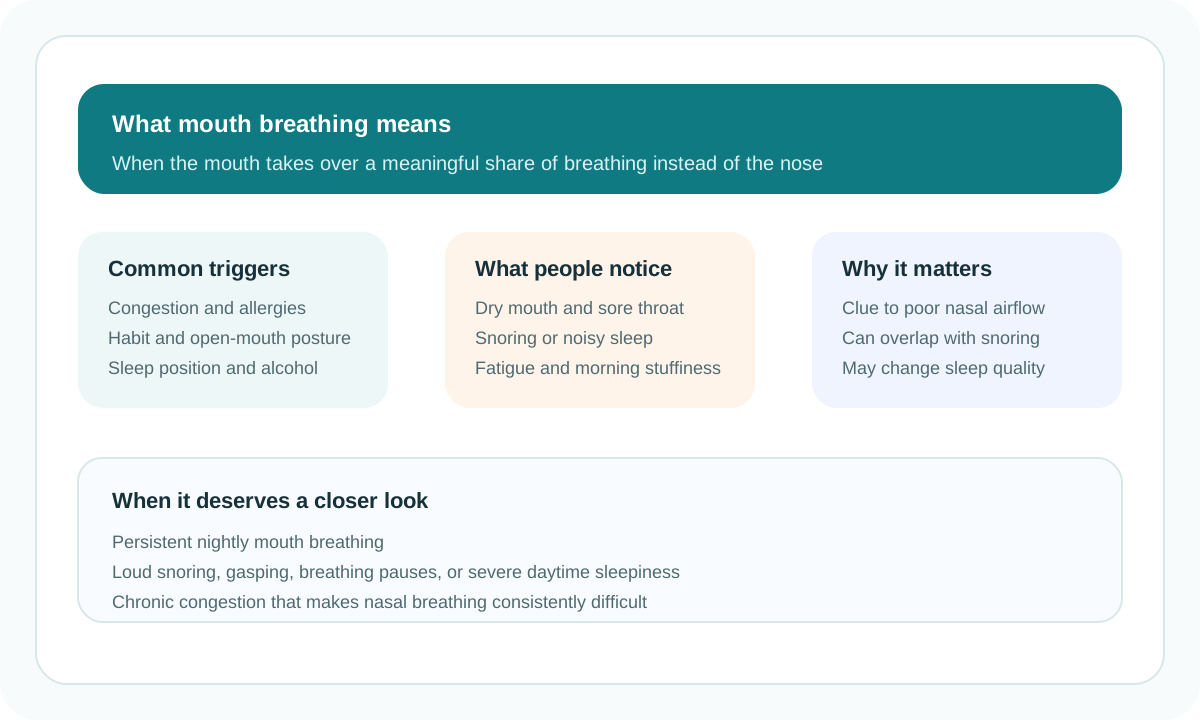
Key takeaways
- Mouth breathing means the mouth is doing a large share of your airflow at rest or during sleep, usually because the nose feels blocked or keeping the lips sealed takes effort.
- Clues include dry mouth, morning breath, sore throat, cracked lips, snoring, and sleep that never feels deep.
- In kids, enlarged adenoids are a classic driver; MedlinePlus lists mouth breathing, snoring, restless sleep, cracked lips, and bad breath among possible signs.
- A 2022 review in Frontiers in Public Health ties persistent childhood mouth breathing to upper-airway obstruction and dentofacial development issues—worth taking seriously, not dismissing as a phase.
- Loud snoring, gasping, or pauses someone else notices moves the topic from “habit” to “get evaluated”—see our mouth breathing at night guide.
What mouth breathing means
Mouth breathing means the mouth is carrying a meaningful share of airflow instead of the nose. It may happen only at night, only during a flare of congestion, or through much of the day when the nose never feels open enough.
The simple version is this: if the nose cannot comfortably do the job, the mouth often takes over. Sometimes that switch is temporary and appropriate. Sometimes it becomes the default pattern, which is when people start noticing dry mouth, noisy sleep, and other downstream problems.
Nose breathing versus mouth breathing
The nose is built for quiet resting breathing. It helps filter, warm, and humidify incoming air before that air reaches the throat and lungs. The mouth can move air quickly when needed, but it is not as good at humidifying airflow during long stretches of sleep or rest.
That difference is why persistent mouth breathing often shows up as dryness first. Dry mouth, cracked lips, sore throat, morning bad breath, and hoarseness are not random side effects; they are clues that the mouth has been doing breathing work it is not ideally built to do all night.
Symptoms of mouth breathing
- Dry mouth or sticky saliva on waking
- Bad breath or a sour taste in the morning
- Sore throat or hoarse voice after sleep
- Cracked lips or open-mouth posture
- Snoring, noisy sleep, or restless sleep
- Chronic nasal congestion or the sense that nose breathing never feels easy
- Daytime sleepiness, tired mornings, or morning headaches when sleep quality is poor
You do not need the textbook label to recognize the pattern. The question is whether it happens mostly during colds or most nights without a clear break.
What causes mouth breathing?
Nasal blockage
Allergies, colds, sinus inflammation, and chronic stuffiness are some of the most common reasons the mouth takes over.
Structural narrowing
A deviated septum, enlarged turbinates, polyps, or other anatomy problems can make nasal breathing feel hard even when you are not sick.
Enlarged adenoids in children
MedlinePlus notes that children with enlarged adenoids often breathe through the mouth, especially at night, and may also snore, sleep restlessly, and have cracked lips or bad breath.
Sleep-related airway narrowing
Some people open the mouth during sleep because breathing feels easier that way when the throat narrows or the nose is only partly open.
How the pattern can differ in adults and children
Adults and children can share the same visible habit, but the underlying reasons are often different enough that the evaluation should not be one-size-fits-all.
Adults
Common drivers include chronic allergies, sinus congestion, a deviated septum, enlarged turbinates, nasal polyps, weight-related airway narrowing, and sleep apnea.
Children
Enlarged adenoids or tonsils can make the nose feel blocked. MedlinePlus notes that enlarged adenoids may cause mouth breathing, dry mouth, cracked lips, snoring, and restless sleep.
Shared clue
If the mouth opens mostly during sleep, look for congestion, sleep position, snoring, gasping, or pauses rather than assuming it is only a daytime habit.
Habit after blockage
Some people keep an open-mouth pattern after airflow improves. That is when oral-function retraining may be discussed after the airway question is handled.
Why mouth breathing can matter over time
The nose is usually the preferred route for resting breathing because it filters, warms, and humidifies air before it reaches the lungs. When the mouth is doing that job for long stretches, the most obvious effects are dryness and poor sleep quality. In children, the concern is broader.
The 2022 review in Frontiers in Public Health links mouth breathing in children with upper-airway obstruction and with changes in dentofacial development, including a higher risk of malocclusion. That does not mean every child with chapped lips is headed for a major dental problem. It does mean persistent mouth breathing is worth treating as a real medical pattern, not just a harmless habit.
When mouth breathing happens mostly at night
Night-only mouth breathing often points to one of three buckets: congestion that gets worse lying down, a sleep-position problem, or sleep-disordered breathing. That is why open-mouth sleep often travels with snoring.
This is also where escalation matters. MedlinePlus Genetics estimates obstructive sleep apnea affects about 2 to 4 percent of children and at least 10 percent of adults worldwide. If mouth breathing comes with gasping, witnessed pauses in breathing, loud snoring, or dangerous daytime sleepiness, the right next step is evaluation, not a quick hack.
Signs that need more than self-care
Mouth breathing alone does not diagnose sleep apnea, and symptom checklists should not be treated like a diagnosis. The American Academy of Sleep Medicine says adult obstructive sleep apnea should be diagnosed with polysomnography or a technically adequate home sleep apnea test, not with questionnaires alone.
- Loud habitual snoring plus gasping, choking, or witnessed pauses in breathing
- Morning headaches, dangerous sleepiness, or falling asleep during routine activities
- High blood pressure or heart/lung disease with possible sleep-disordered breathing
- A child with mouth breathing plus restless sleep, frequent snoring, growth concerns, or school-day behavior changes
How mouth breathing is usually diagnosed and treated
The treatment depends on the cause. A blocked nose, enlarged adenoids, and sleep-related airway narrowing do not get handled the same way, so the first step is sorting which pattern fits best.
- Nasal causes: Allergies, sinus problems, and congestion are treated first because mouth breathing often improves when nasal airflow improves.
- Structural causes: ENT evaluation may be needed if the nose feels chronically blocked or one side is always worse.
- Children with adenoid symptoms: Pediatric or ENT evaluation matters when mouth breathing, snoring, restless sleep, and chronic congestion show up together.
- Sleep-related concerns: Snoring, gasping, breathing pauses, and unrefreshing sleep may call for sleep-apnea testing.
- Habit and oral function: If the airway is open but the mouth-open pattern remains, retraining lip seal and tongue posture may help. Our myofunctional therapy guide explains that part.
Treatment can be simple or layered. Allergy care, nasal steroid sprays, treatment for sinus infection, adenoid care, septum or turbinate procedures, oral appliances, CPAP, and oral function therapy all belong to different parts of the map. The useful question is not "How do I force my mouth shut?" It is "Why is my mouth doing the breathing?"
When to see a doctor about mouth breathing
- Mouth breathing most nights for weeks instead of only during a cold
- Chronic nasal blockage, especially if one side stays worse
- Loud snoring, gasping, or witnessed breathing pauses
- Daytime sleepiness, poor focus, or morning headaches
- A child with restless sleep, cracked lips, bad breath, or frequent open-mouth posture
Frequently asked questions
- What is mouth breathing? It means a person regularly breathes through the mouth instead of the nose during sleep, rest, or both.
- Is mouth breathing always bad? No. Temporary mouth breathing during a cold or intense exercise is common. It becomes more important when it is persistent or tied to poor sleep and chronic symptoms.
- What causes mouth breathing? Common causes include allergies, colds, sinus inflammation, enlarged adenoids, structural nasal narrowing, and sleep-related airway problems.
- What are the most common symptoms? Dry mouth, sore throat, bad breath, cracked lips, snoring, restless sleep, and chronic congestion are the complaints people mention most often.
- Should I tape my mouth at night? Not without first understanding why you are mouth breathing. If nasal blockage or sleep apnea is possible, mouth taping can hide a problem that needs evaluation.
- Can mouth breathing be a sign of sleep apnea? Yes, it can be part of the pattern, especially with loud snoring, gasping, witnessed pauses, morning headaches, or significant daytime sleepiness. Testing is what confirms sleep apnea.
Sources and references
- Cleveland Clinic: Mouth breathing
- MedlinePlus (NIH): Adenoids and enlarged adenoids
- MedlinePlus (NIH): Enlarged adenoids
- MedlinePlus Genetics: Obstructive sleep apnea
- American Academy of Sleep Medicine: Diagnostic testing guideline for adult obstructive sleep apnea
- Frontiers in Public Health: The impact of mouth breathing on dentofacial development: A concise review